Why Does My Baby Wake Every 2 Hours at Night?
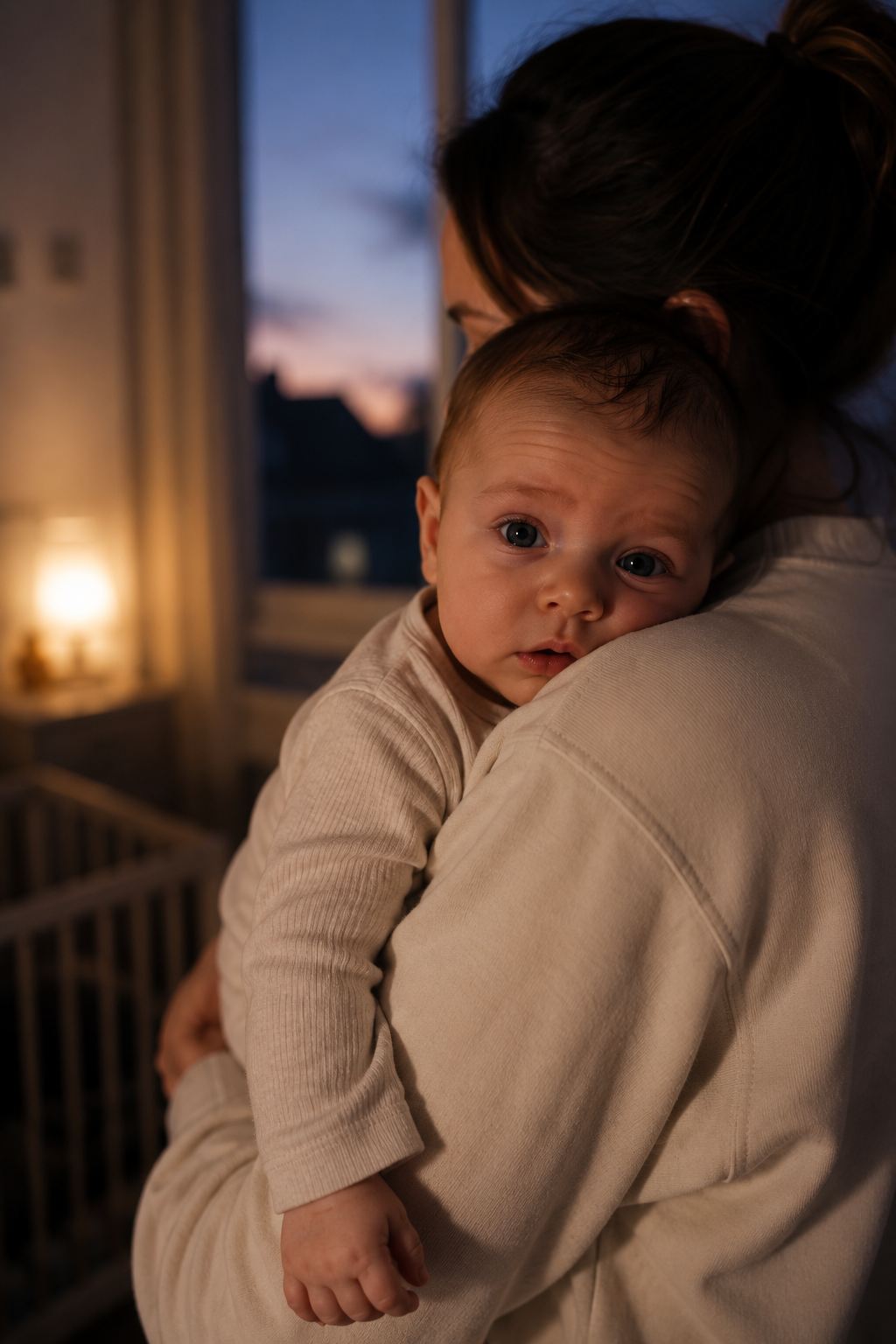
If you're reading this at 3am with a baby wriggling against your chest, wondering how on earth another two hours have already passed — I want you to know something first: you are not doing anything wrong.
Frequent night waking is one of the most common questions I hear from exhausted parents, and it's also one of the most misunderstood. There's so much noise out there about "sleep training" and "self-soothing" that it's easy to start believing that if your baby wakes often, you must have created a bad habit somehow. You haven't. Let's talk about what's actually going on.
It's Often Just Biology, Not a Bad Habit
Babies aren't wired to sleep the way adults do. Their sleep cycles are much shorter — roughly 45 minutes to an hour, compared to our 90-minute cycles — and they spend a much greater proportion of that time in lighter, more easily disrupted sleep. Waking between cycles isn't a malfunction. It's how their little bodies are designed to work, especially in the first year.
On top of that, a two-hourly waking pattern often lines up with genuine physical needs:
Hunger. Babies' tummies are small, and milk (whether breast or bottle) digests quickly. Frequent waking to feed is completely normal, particularly in the newborn and early infant stages.
Developmental leaps. Growth spurts, teething, and new skills (rolling, sitting, crawling) can all temporarily disrupt sleep as your baby's brain and body are busy working overtime.
Temperature and comfort. A room that's too warm, too cool, or a wet nappy can be enough to pull a baby out of light sleep.
Associations formed at bedtime. If your baby always falls asleep being fed, rocked, or held, they may look for that same thing to get back to sleep every time they surface between cycles — which, remember, happens naturally and often.
Why "Just Let Them Cry It Out" Isn't the Only Answer
I know how tempting it can feel, in the depths of exhaustion, to try anything that promises results fast. But cry-it-out approaches ask babies to cope with big feelings entirely on their own, and that's not a trade-off I've ever been comfortable asking a parent to make — because I didn't want to make it myself when I was in your shoes.
The good news is that gentle doesn't mean ineffective. Frequent waking can genuinely improve with warmth, consistency, and a few thoughtful changes to routine and environment — no tears required from anyone, including you.
Small Shifts That Can Make a Real Difference
Build a simple, predictable wind-down routine so your baby's body starts to recognise "it's sleep time" cues.
Check the room: aim for a cool, dark, quiet environment — light and noise are more disruptive than most people realise.
Notice patterns. Keeping a loose log of wake times for a few nights can reveal whether hunger, habit, or development is the main driver.
Give your baby a little space to resettle before rushing in — sometimes a small stir isn't a full wake-up, just a pass through a lighter sleep stage.
Be patient with yourself. Change tends to happen gradually, in gentle layers, not overnight.
You Don't Have to Figure This Out Alone
If you're in Chesterfield or Derbyshire (and beyond) and your baby's frequent waking is leaving you exhausted, Feather & Sleep offers gentle, personalised sleep support built around your family — no cry-it-out methods, no guilt, just practical, compassionate guidance from someone who has genuinely been there. Through the Comforting Through Change™ approach, I look at what's really driving your baby's waking and build a plan that feels right for your family, one small step at a time.
You're already doing an incredible job. Sometimes you just need a little support to help everyone sleep a bit easier.