The Dummy Dilemma: Why It's Not Really "Bad Habit" vs "Good Habit"
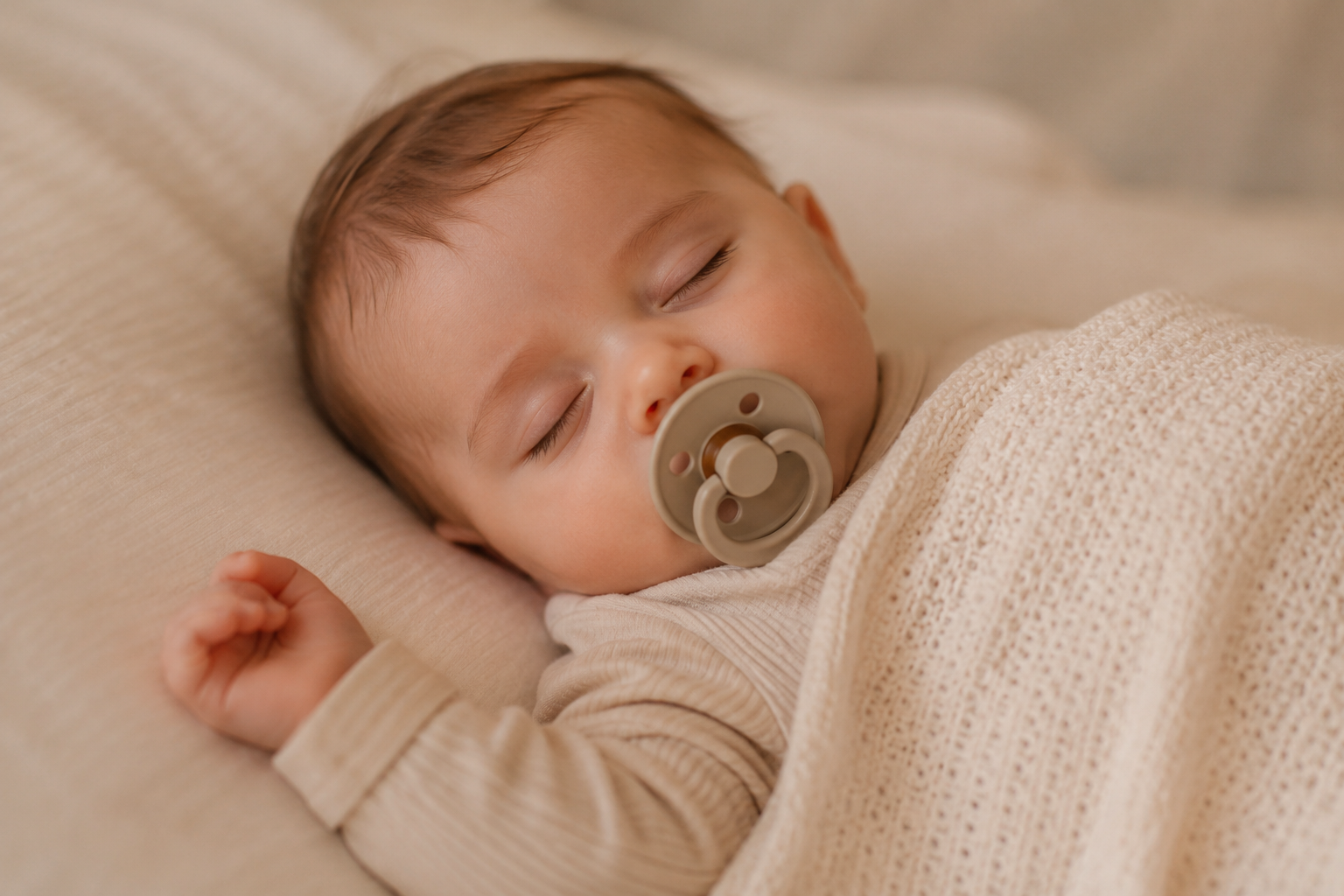
If you've ever tiptoed back into a dark nursery for the third time in an hour to pop a dropped dummy back in, you'll know the particular exhaustion of dummy dependence. It's one of the questions I get asked most often as a sleep consultant — usually with a slightly guilty tone, as if the dummy itself is the enemy.
It isn't. But it's worth understanding what's really going on.
Why Babies Fall in Love with Dummies
Sucking is one of the most powerful self-soothing tools your baby is born with. It's calming, it's instinctive, and in the early weeks and months, a dummy can be a genuine lifeline — for your baby's nervous system and for your sanity.
The trouble starts when the dummy becomes the only way your child knows how to fall asleep, and it's a way that requires your help to maintain. A dummy falls out during light sleep (which happens far more often than most parents realise), your baby stirs, can't find it, and calls out for you to put it back. Multiply that by every sleep cycle, every single night, and you can see why so many families end up running on empty.
This isn't a discipline problem or a sign you've "spoiled" your baby. It's simply that your little one hasn't yet built the association between drowsy-but-awake and falling asleep independently — and the dummy, however unintentionally, has become part of the falling-asleep formula rather than a comfort tool used alongside it.
The Cry-It-Out Myth
Here's where a lot of well-meaning advice goes wrong. The internet is full of suggestions to simply remove the dummy cold turkey and let your baby "learn." I don't work that way, and I never will.
Babies don't need to be left to cry to learn new sleep skills. What they need is a gradual, gentle shift in the pattern — one that still meets their need for comfort and closeness, just in a way that doesn't require you to physically reinsert a dummy six times a night.
This is really the heart of the Comforting Through Change™ approach that I use: change happens through connection, not withdrawal. We're not taking comfort away from your baby. We're widening the toolkit of comfort they have access to, so sleep doesn't hinge on one single prop.
A Gentler Way Forward
A few of the principles I lean on with families working through dummy dependence:
Separate the association gradually. Rather than removing the dummy from bedtime altogether overnight, we look at reducing its role step by step — perhaps offering it for the settling period but not throughout the whole night, so your baby starts to experience falling back to sleep without it in small, manageable doses.
Build in other anchors of comfort. A consistent bedtime routine, a familiar comfort object (once age-appropriate), your voice, your touch — these all become part of the new pattern, so your child never feels the safety net has simply vanished.
Adjust the environment, not just the habit. Sometimes it isn't really about the dummy at all — it's overtiredness, an inconsistent routine, or a sleep environment that isn't quite supporting deep, restorative sleep. We look at the whole picture together.
Go at your child's pace, not a stranger's schedule. Every baby is different. What works beautifully for one family might be entirely wrong for another, which is why generic advice so often falls flat — and why personalisation matters so much to me.
You're Not Doing Anything Wrong
If you're currently up half the night on dummy-duty, please hear this: needing help doesn't mean you've failed, and neither does your baby's attachment to their dummy. It simply means it's time for a bit of guidance on how to move forward — gently, and without a single tear that didn't need to be shed.
I remember my own early days of newborn sleep struggles vividly — the exhaustion, the second-guessing, the feeling that everyone else seemed to have it figured out. That's exactly why I do what I do now. No parent should have to face this alone, and no baby needs to cry it out to sleep well.
If dummy dependence is behind your family's broken nights, I'd love to help you find a path through it that feels calm, kind, and completely doable. [Book a free discovery call] and let's talk about what gentle change could look like for you.
Rachel is a qualified infant sleep consultant based in Chesterfield, Derbyshire and founder of Feather & Sleep, offering gentle, no cry-it-out sleep support for babies and toddlers.