
Just when you think you’ve cracked your baby’s naps, everything changes. The nap that was easy yesterday is a battle today, the morning nap is suddenly too long, and bedtime is creeping later and later. Sound familiar?
This is a nap transition, and I want you to know from the start that it’s completely normal. Nothing has gone wrong, and you haven’t done anything to cause it. Your baby is simply growing, and their sleep needs are growing with them.
In this post, I’ll walk you through the common ages for nap transitions, how to make each one gentle, and what to expect along the way.
What is a nap transition?
A nap transition is when your baby or toddler drops a nap and moves to a smaller number of longer naps. As they get older, they can stay awake for longer stretches, so they need less daytime sleep and more time awake to play, learn and build up the sleepiness they need for a good night.
It’s not a switch that flips overnight. Most transitions are a gradual process, with a few wobbly weeks in the middle.
Common ages for nap transitions
Every baby is different, so please treat these ages as a guide, not a deadline.
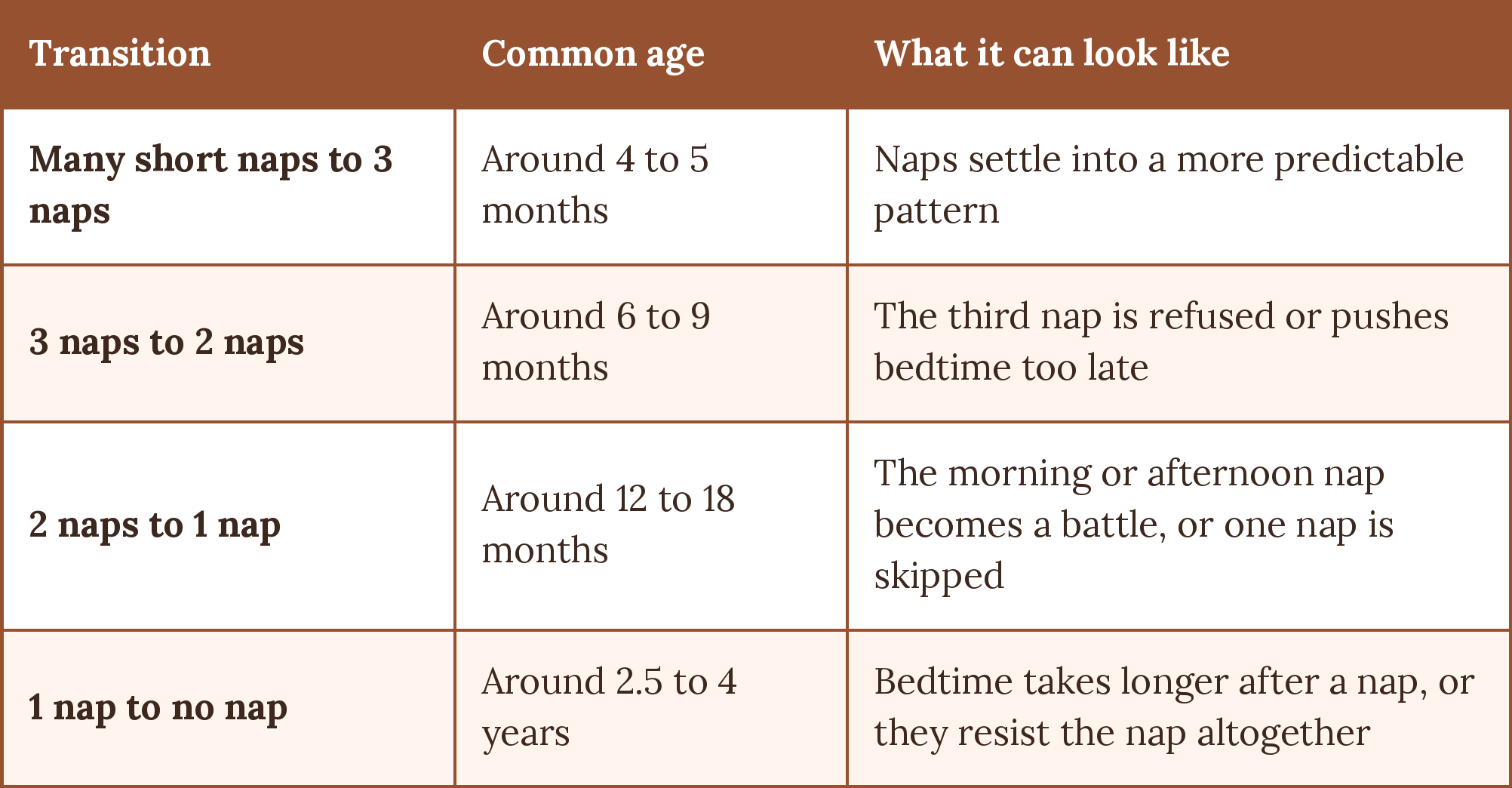
If your baby is younger than 4 months, naps are usually still unpredictable, and that’s completely normal too. There’s no routine to transition from yet.
Signs your baby might be ready
Look for a few of these happening together over a week or so, rather than on a single day:
Naps they used to take easily are becoming a struggle
They’re taking much longer to settle for naps
Naps have become short, or they’re skipping one altogether
The last nap of the day is squashing bedtime, so they’re not tired at bedtime
Bedtime is getting later, or they’re waking earlier in the morning
It’s worth knowing that a sleep regression, illness, teething or a developmental leap (like rolling, crawling or walking) can look very similar. If you think it might be one of these, give it a week or two before changing anything.
How to make a nap transition gently
1. Watch, don’t rush. Keep a simple note of naps, feeds and bedtime for a few days. Patterns are easier to spot on paper than at 3am.
2. Stretch the wake windows gradually. Move naps by 10 to 15 minutes at a time, rather than making one big change, so your baby has time to adjust.
3. Bring bedtime earlier for a while. Early bedtimes are your best friend during a transition. If naps are shorter or fewer, an earlier night helps your baby avoid becoming overtired.
4. Be flexible with the “in-between” nap. Some days will need the old schedule, and others the new one. A pushchair, carrier or car nap can bridge the gap, and that’s absolutely fine.
5. Keep the wind-down the same. A predictable routine before every nap and bedtime (a cuddle, a song, the same few steps) gives your baby comfort while everything else is changing.
6. Make the most of daylight and play. Fresh air, natural light and plenty of active time in the day all help build healthy sleepiness.
7. Be kind to yourself. There’s no “perfect” transition. You’re making gradual changes at a pace that works for your family, and that’s exactly right.
What to expect during a transition
Honestly? It can be a bit bumpy. Many families find a nap transition takes anywhere from a couple of weeks to a month or so, and here’s what’s common:
Some good days and some tricky days. It’s rarely a straight line.
Shorter naps. While your baby adjusts, naps may be shorter than usual.
Grumpy late afternoons. They’re stretching further than they’re used to, so you may see more tiredness before tea or bedtime.
Earlier bedtimes. This is normal, and temporary.
Wobbly nights. You might see more night waking or early starts for a short time, which usually settles once the new routine is established.
It’s all temporary. Your baby isn’t “broken”, and you haven’t undone any of your hard work. They’re growing, and they’ll find their rhythm.
When to ask for help
If your baby’s naps have been all over the place for more than a few weeks, if you’re not sure whether it’s a transition or something else, or if you’re simply exhausted and would love some support, I’d love to help.
My sleep support packages are built around the Comforting Through Change™ approach: gentle, responsive and tailored to your child, with no cry-it-out methods. Together we’ll look at your baby’s naps, create a personalised plan that suits your family and make changes at a pace that feels right for you.
Ready to talk? Book your free 15-minute discovery call and we’ll chat about what’s happening and how I can help.
Know a tired parent?
I also have gift vouchers available on my website, in £25, £50 and £100 amounts, which go towards a sleep support package. They’re a thoughtful gift for a new mum, or a friend with a little one who’s struggling with naps and nights. Take a look at the gift vouchers here.
Sweet dreams,
Rachel